
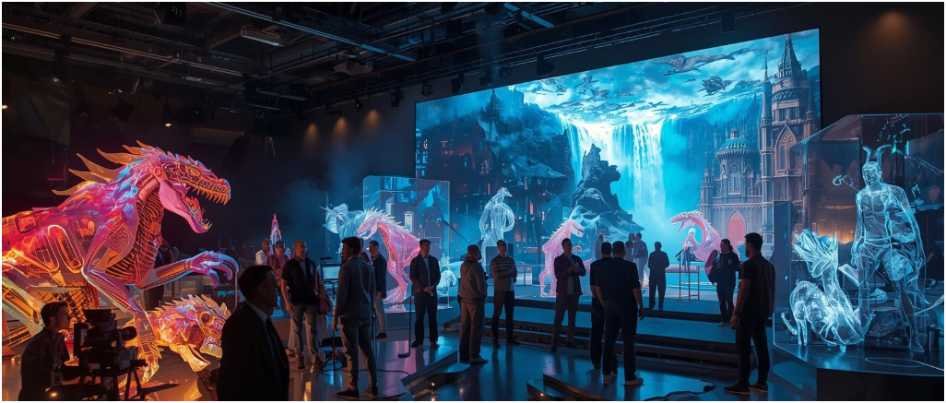
I work with movies and media often enough that understanding CGI technology in films has become part of my daily routine. When I watch a movie, I naturally analyze how digital environments, characters, and effects interact with real footage. Knowing how CGI works helps me recognize what makes a scene believable and why certain moments stand out visually.
CGI influences almost every modern film. Once you understand the process, you start seeing patterns in how directors use it to build worlds, scale environments, or enhance action without relying only on practical sets.
How Does CGI Technology in Films Create Digital Elements?
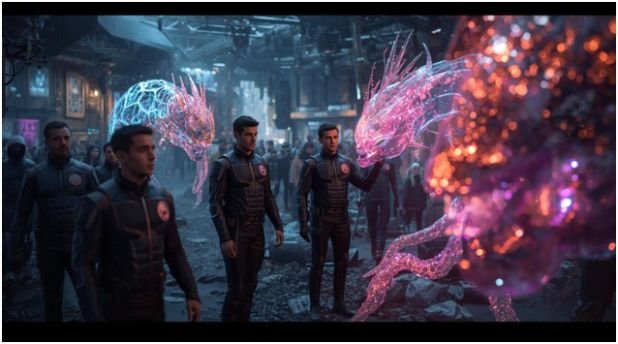
I often describe CGI as the digital construction system behind modern filmmaking. Whenever I break down how a scene is made, I look at five major stages that artists follow to create convincing visuals.
3D modeling and Texturing
The work begins with 3D modeling, where artists build digital characters, props, or environments. These models act as the foundation for all later steps. Then I look at texturing, which adds detailed surfaces like metal, stone, skin, fabric, or fur. This step helps digital objects match real-world materials.
Animation and Tendering
Next comes animation, when models start moving. Motion capture plays an important role when filmmakers want realistic human or creature performance. From there, the entire digital setup moves into rendering, which calculates lighting, shadows, reflections, and visual depth. Rendering converts all the data into final 2D frames.
Compositing
Finally, compositing merges CGI with live-action footage. This involves matching color, lighting, and motion so the digital elements blend naturally with real environments. Without proper compositing, CGI often stands out or looks disconnected, so this step determines the quality of the final image.
What Limitations Shaped Early CGI Technology in Films?

When I study early examples, I can see how limited hardware and software shaped the look of older CGI. Computers lacked the power to generate detailed models, so early CGI relied on simple shapes and wireframes. Artists worked with minimal polygon counts and very basic texture maps.
Lighting and shading also restricted realism. Early systems used flat or Gouraud shading, which couldn’t simulate soft shadows, reflections, transparency, complex materials, or subsurface scattering. These limitations made objects look plastic or artificial.
Another challenge came from integration. Early CGI often struggled to match the lighting, camera angles, or motion of live-action footage. Digital elements rarely interacted with their surroundings, so there was no dust, shadow interaction, or physical weight.
Costs added another layer of difficulty. Few people had access to the hardware, and many effects required custom-written code. The small talent pool meant filmmakers used CGI only for short, high-impact moments. This is why films like Jurassic Park mixed CGI with animatronics to balance realism and technical constraints.
How Does CGI Compare to VFX in Modern Filmmaking?

I separate the two terms in my workflow because CGI technology in films refers to creating digital assets, while VFX refers to the entire process of integrating and enhancing footage. CGI is a tool inside the larger VFX pipeline.
VFX includes compositing, matte painting, camera tracking, wire removal, color matching, and practical enhancement. CGI specifically handles digital characters, environments, simulations, and props.
A simple comparison makes the distinction clear:
| Aspect | CGI | VFX |
| Purpose | Creates digital content | Integrates digital + live action |
| Scope | A specific technique | A full workflow of effects |
| Dependency | Works independently (e.g., animation films) | Uses CGI + live-action footage |
| Examples | Digital creature, digital building | Green screen replacement, wire removal |
Once you understand this difference, it becomes easier to identify which parts of a scene rely on computer creation and which parts rely on visual integration.
Where Has CGI Technology in Films Been Used Most Effectively?

I often reference certain films when explaining major improvements in CGI because they show how the technology evolved. Early titles like Vertigo, Westworld, and Futureworld introduced experimental digital sequences. They didn’t aim for photorealism, but they demonstrated what computers could accomplish.
Films like Tron and Star Wars pushed wireframe graphics and digital landscapes further. Their digital effects still look stylized today, but they paved the way for more ambitious projects.
Then came breakthroughs like Terminator 2 and Jurassic Park, which combined CGI with advanced animatronics and practical effects. These films proved that digital creatures could interact on screen in ways that felt convincing.
Later, Toy Story showed that a full-length CGI film was not only possible but commercially successful. Then Avatar expanded the use of motion capture, digital environments, and real-time performance systems.
Understanding these milestones helps me track how each decade pushed the technology forward.
FAQs About CGI Technology in Films
1. Why does CGI sometimes look unrealistic?
Unrealistic CGI usually comes from lighting mismatches, low-detail models, incomplete textures, or motion that doesn’t follow real physics. When CGI doesn’t interact with the environment—like not casting proper shadows or displacing dust—the illusion breaks. High-quality CGI requires accuracy in lighting, texture, and compositing.
2. Does CGI replace practical effects?
No. CGI supports practical effects but doesn’t eliminate them. Filmmakers often use practical sets or props and then expand them digitally. Practical elements add texture, shadows, and physical realism that CGI builds upon.
3. Is CGI expensive to produce?
Costs vary widely. A simple digital object or background replacement is affordable. Complex creatures, full digital worlds, or large-scale simulations require bigger budgets, more artists, and longer render times.
4. Is CGI used in every genre?
Almost every modern film uses CGI—even those that appear grounded. It’s used for sky replacements, background cleanup, object removal, set extension, and environmental detail. Many of these small uses go unnoticed.
Final Thoughts: CGI That Works Hard Behind the Scenes
CGI continues to shape how films look, feel, and communicate scale. Now that I understand CGI technology in films, I recognize how each digital layer contributes to storytelling.
The technology grows every year, and new tools like AI-assisted animation and real-time rendering keep expanding what filmmakers can achieve.
A helpful tip: Pay attention to lighting and texture the next time you watch a scene with heavy effects. Those two details reveal a lot about the quality of CGI and the skill behind it.






Be First to Comment